RESEARCH
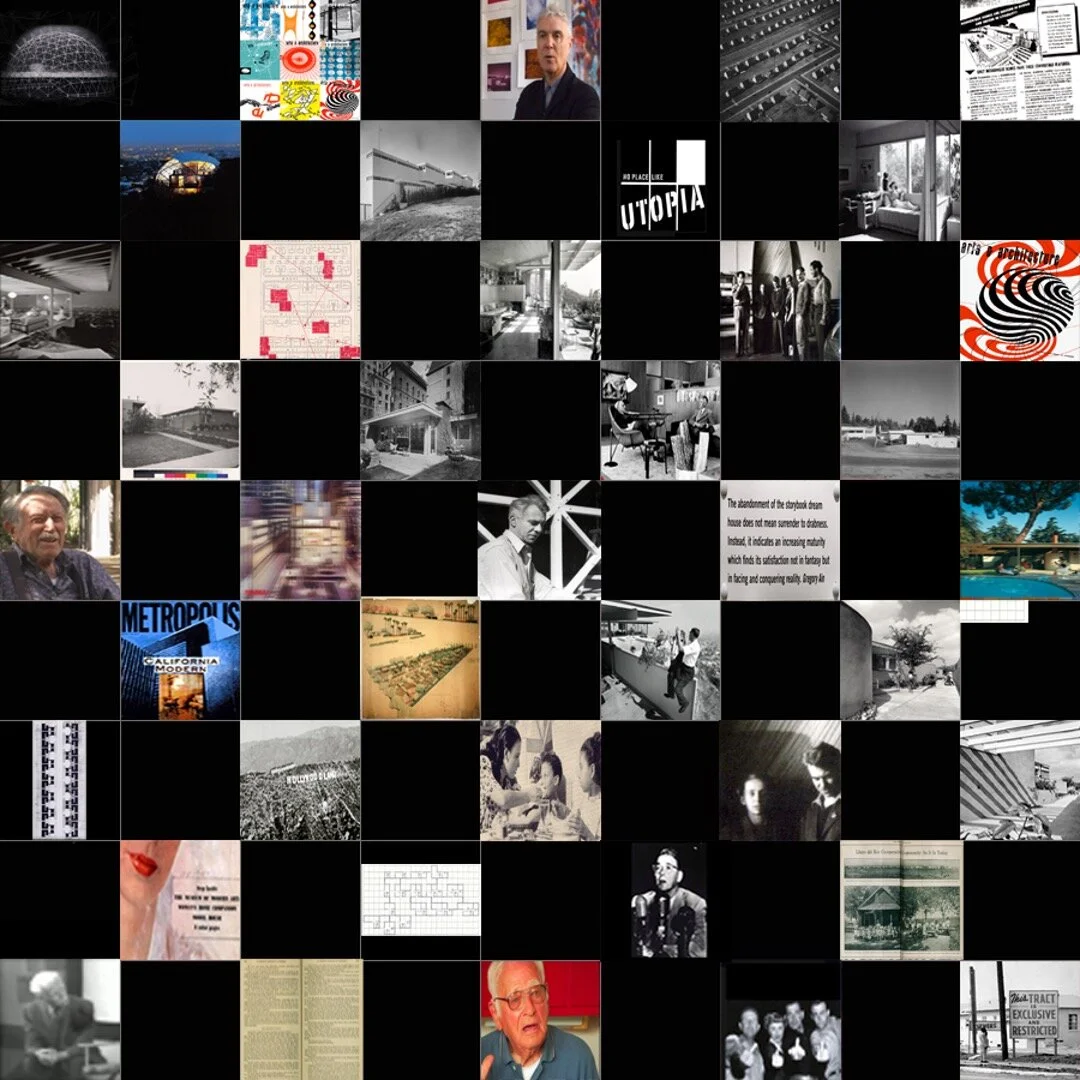
Initiated in 2003, No Place Like Utopia is a long-term, “excavation” research project, documentary film, website, and archival platform singularly focused upon the Los Angeles modernist architect Gregory Ain.
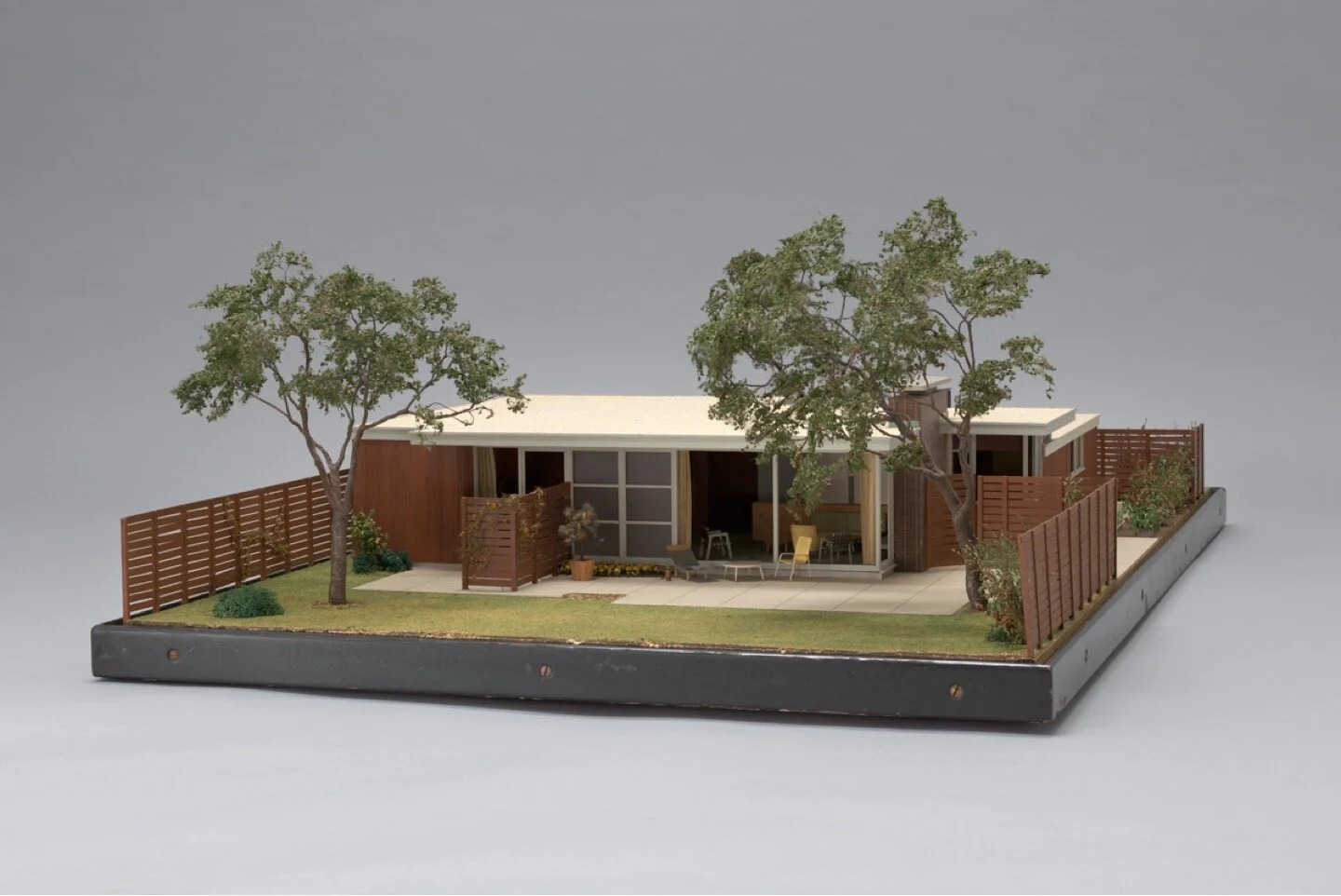
Long before the recent resurgence of interest in Ain, No Place Like Utopia advanced original research into his architectural legacy written by Anthony Denzer, David Gebhardt, Esther McCoy, and Elizabeth Mock. No Place Like Utopia expanded upon these voices, re-iterating Ain’s socio-political vision and, specifically, the then-unknown fate of his 1950 MoMA Exhibition House, Our View of the Future.
Lambert and Robbins conducted one of the earliest sustained critical investigations into Ain’s practice—combining archival research, firsthand interviews, and public-facing exhibitions. This work has challenged entrenched assumptions within architectural history, most notably the long-held claim that Ain’s 1950 exhibition house , Our View of the Future. had been destroyed due to “lack of public interest.” Subsequent scholarly and media recognition, including recent coverage in The New York Times, has affirmed the project’s foundational role in reestablishing Ain’s presence within contemporary discourse. What was once considered marginal has, through this research, reentered the field as both subject and framework of inquiry.
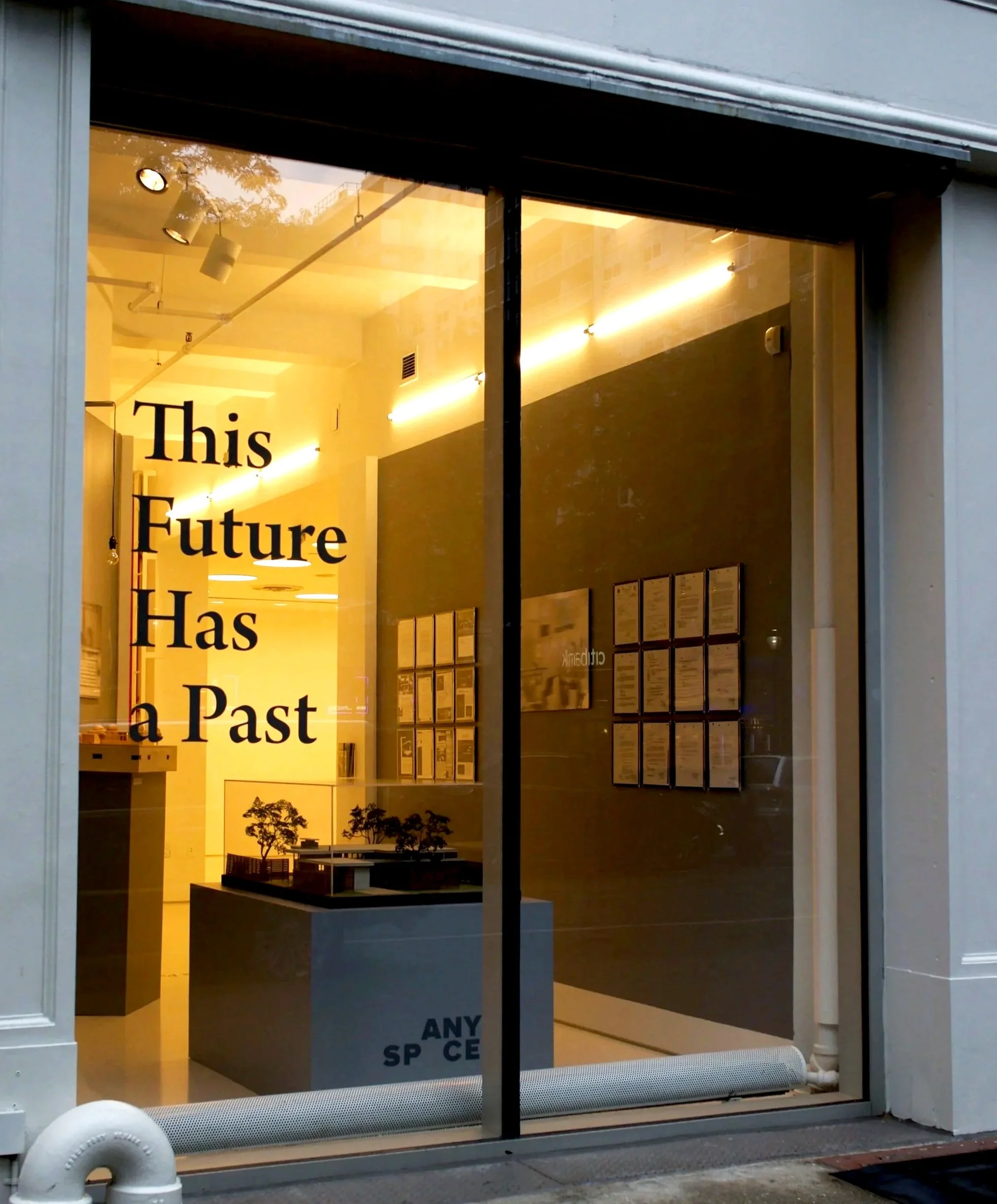
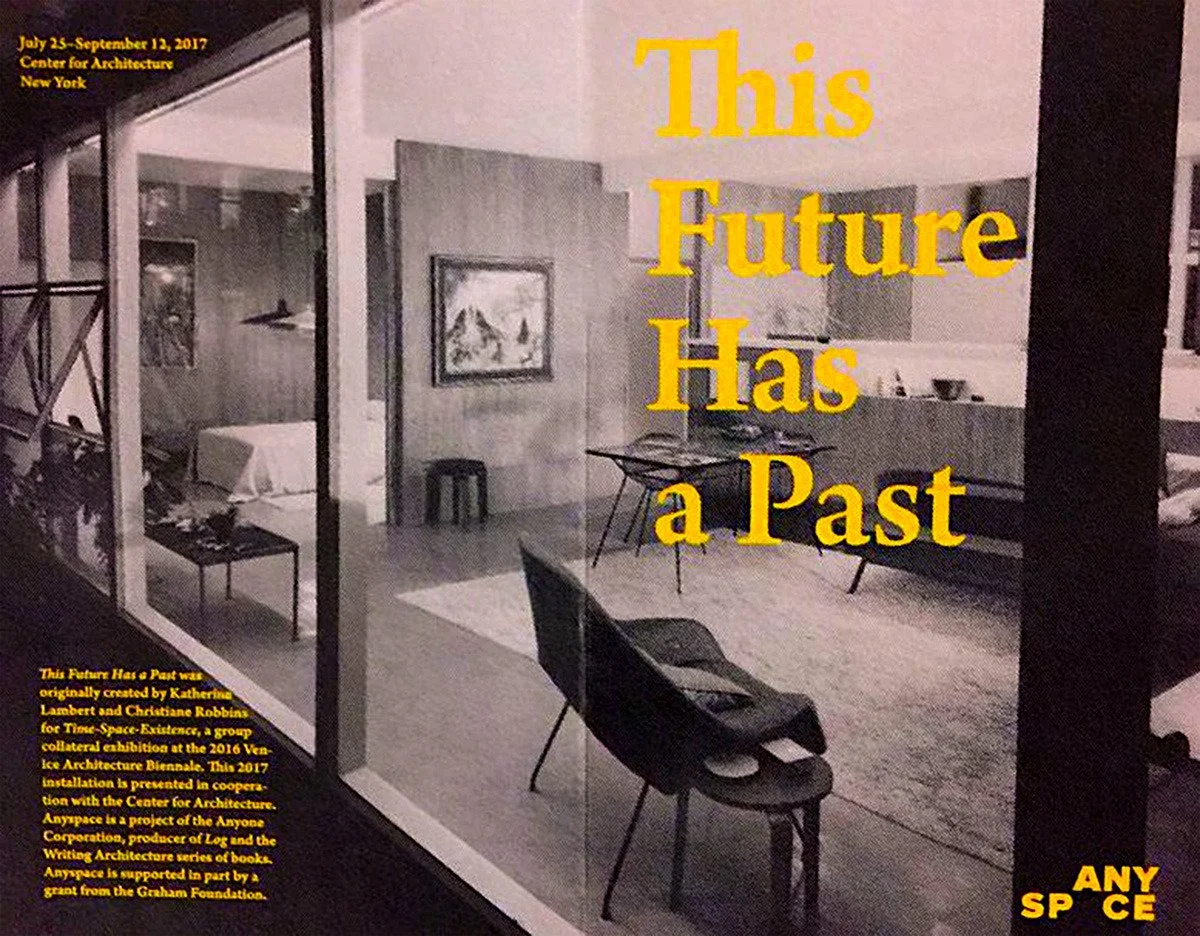
The No Place Like Utopia project first entered the international realm through the 2011 Gwangju Biennial, the 2016 Venice Architecture Biennale and a 2017 Center for Architecture solo exhibition This Future Has a Past. As such, it made a significant contribution to establishing the critical framework through which Ain would later be reconsidered in the press, in exhibitions, and in academic scholarship.
The importance of the No Place Like Utopia project lies not only in its early date, but in its preservation of rare primary-source testimony and interviews with figures (some of whom have since passed away), including Emily Ain, David Byrne, Joseph Giovanini, Thom Mayne, Wolf Prix, Julius Shulman, and Frank Gehry - making the project not only interpretive but archival: a dynamic record of voices and historical knowledge that can no longer be recovered or reproduced.
Public recognition of the project’s significance appeared early. In 2017, The New York Times and Artsy each amplified the project’s recovery of Gregory Ain’s suppressed political history and the heretofore unresolved fate of the MoMA house. In 2021, The New York Times returned to the story when the house’s survival and location were publicly confirmed. Taken together, this record shows that the central questions now associated with Ain’s recovery entered broad public discourse through a framework that No Place Like Utopia had initiated and been developing for years.
———CHRONOLOGY ———
1999 - 2011
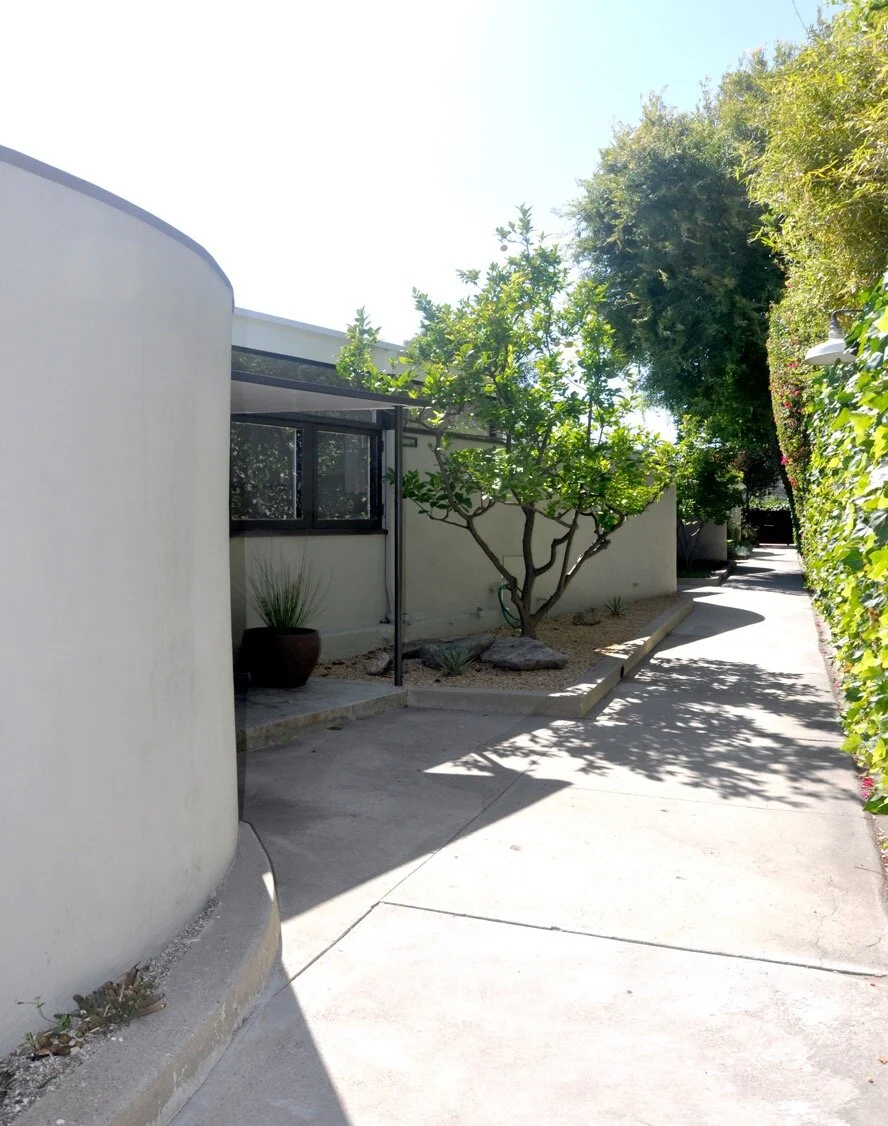
Lived experience at the Avenel Cooperative Housing Project by Gregory Ain and Garrett Eckbo. “An unusual example of a Federal Housing Administration funded project in the postwar period, ten families pooled resources to create a modestly scaled complex that incorporated modern ideas about affordable indoor-outdoor living.” -LA Conservancy
2001
During her MArch studies, Katherine Lambert and Anthony Denzer each began discrete research on modernist architect Gregory Ain and urban housing under the tutelage of UCLA Professor Thomas Hines.
2003–2009
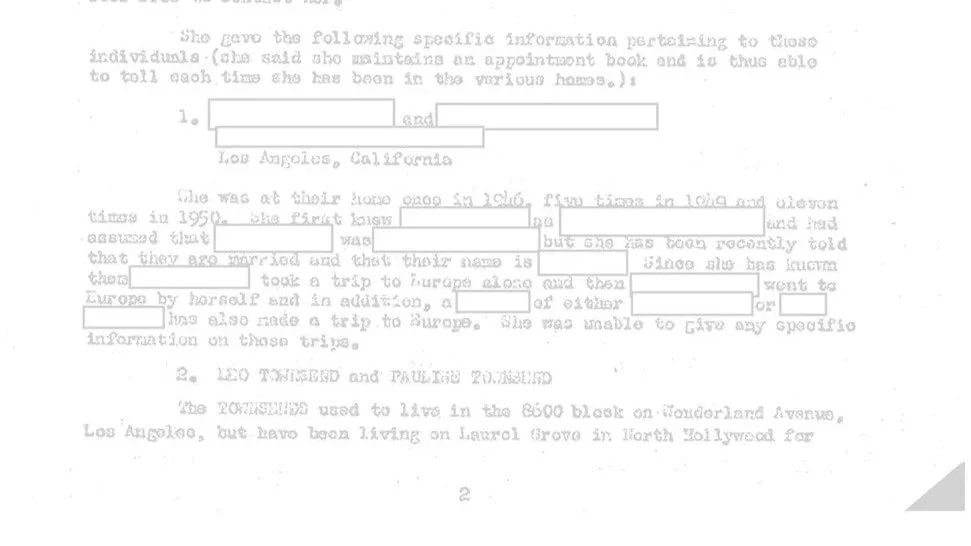
Excavation research on Ain was initiated, along with interviews with neighbors, associates, collaborators, and related figures in Los Angeles and New York. The No Place Like Utopia project produced a uniquely expository foundation of new archival research. This generation of documents, files (FBI), and artifacts resulted in podcasts, exhibitions, installations, catalogs, public presentations, and designed experiences throughout the following decade.
2005-2010
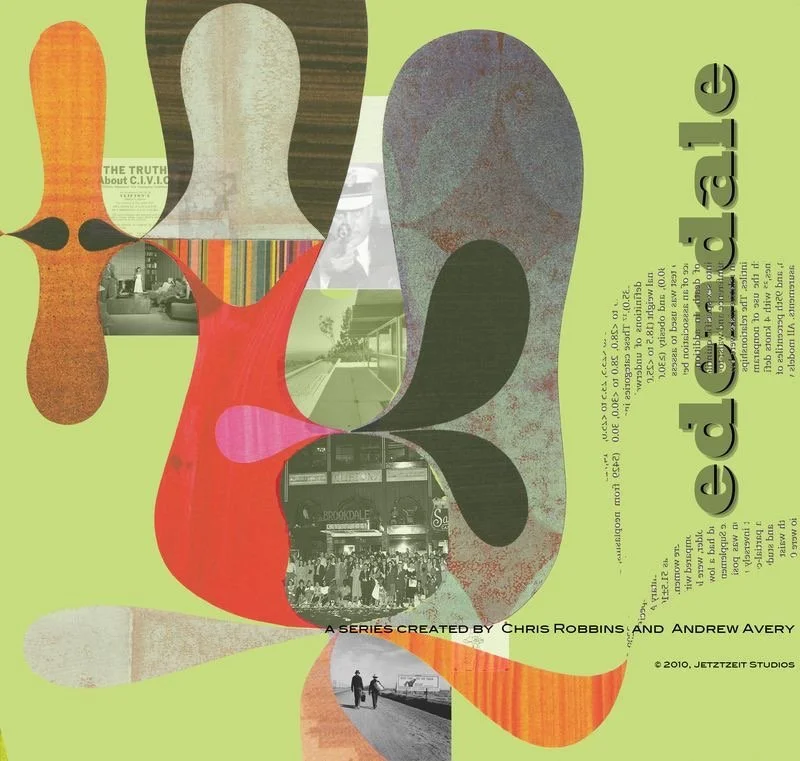
The mini-series Edendale was created and written by Christiane Robbins and Andrew Avery. It was formally submitted for production to major cable entities and is represented by Christopher Tricarico.
2008
The Sundance Institute recognized Robbins and Lambert’s pivotal role in the storytelling ecosystem and featured No Place Like Utopia's short film 1000 sq.ft. selected for their Independent Producers Lab.
2008
Rizzoli publishes Anthony Denzer’s book Gregory Ain: The Modern Home as Social Commentary.
2009
No Place Like Utopia’s first video short, 1000 sq. ft., was selected for screening during the American Association of Architects’ (AIA) Architecture and the City Festival by the San Francisco AIA chapter and then screened nationally under the auspices of the AIA.
2011
Material from the project was presented in relation to the Gwangju Biennale, extending its international exhibition life prior to Venice. Curated by Seung H-Sang and Ai WeiWei, the exhibition design is design is not design included the No Place Like Utopia video short, 1000 sq. ft. to augment the segment on Gregory Ain.
2012
Following the delay of several Freedom of Information Act (FOIA) requests initiated in 2007, FBI files on Gregory Ain were finally delivered to Robbins and Lambert for review.

2015
Christiane Robbins coined the descriptive term “The Most Dangerous Architect in America” while bantering with Anthony Denzer during an interview for No Place Like Utopia while discussing Ain’s inclusion in California’s infamous Tenney Report.
2015
No Place Like Utopia’s first video short, 1000 sq. ft., was screened at a panel discussion accompanying the exhibition, Gregory Ain: Low-Cost Modern Housing and the Construction of a Social Landscape, at the Julius Shulman Institute at Woodbury University in Los Angeles. Other panelists included Barbara Bestor (Architect/Professor), Rick Corsini (Architect/Professor), Anthony Denzer (Professor/Author), and Anthony Fontenot (Professor/Curator).
2016
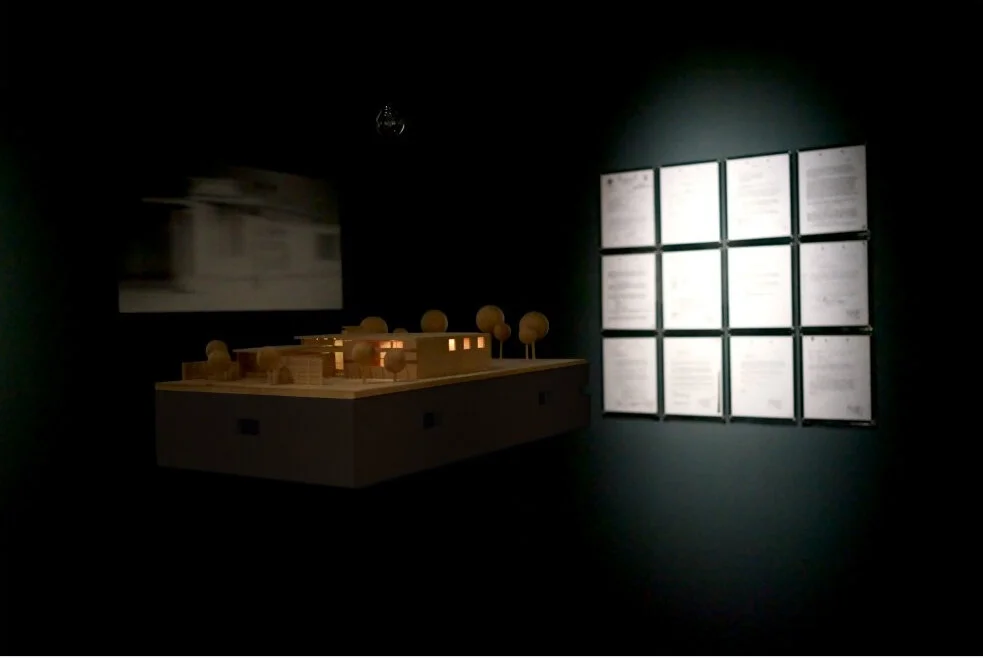
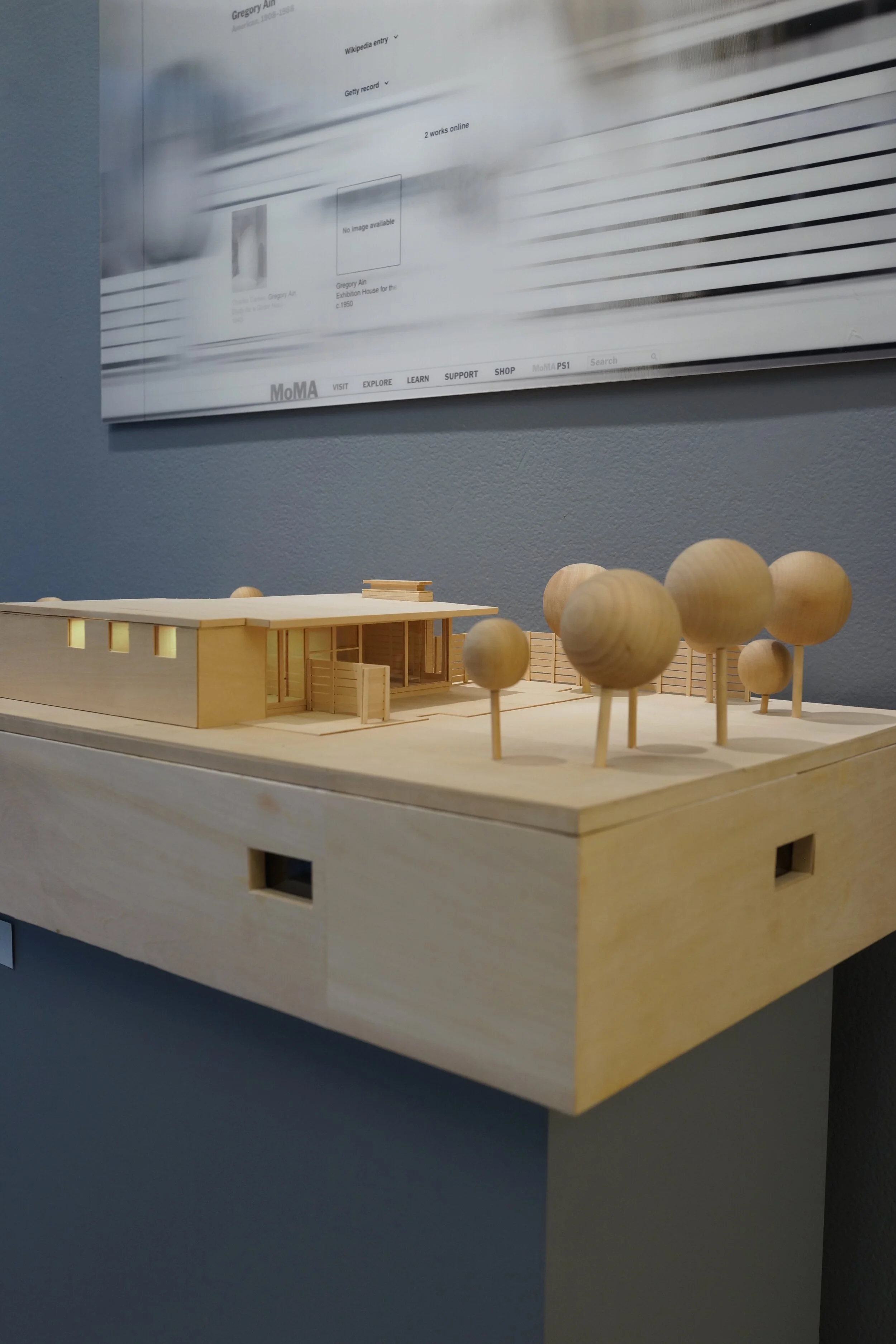
This Future Has a Past debuts at the Venice Architecture Biennale, Reporting from the Front, as a collateral exhibition. This installation globally advanced the project’s investigation into Ain’s political marginalization and Lambert and Robbins’ speculation of the unresolved fate of his 1950 MoMA Exhibition House, Our View of the Future.
2017
The Graham Foundation awarded a grant to Anyspace enabling Robbins & Lambert to further develop their research into Gregory Ain and his “missing” Exhibition House from 1950.
2017
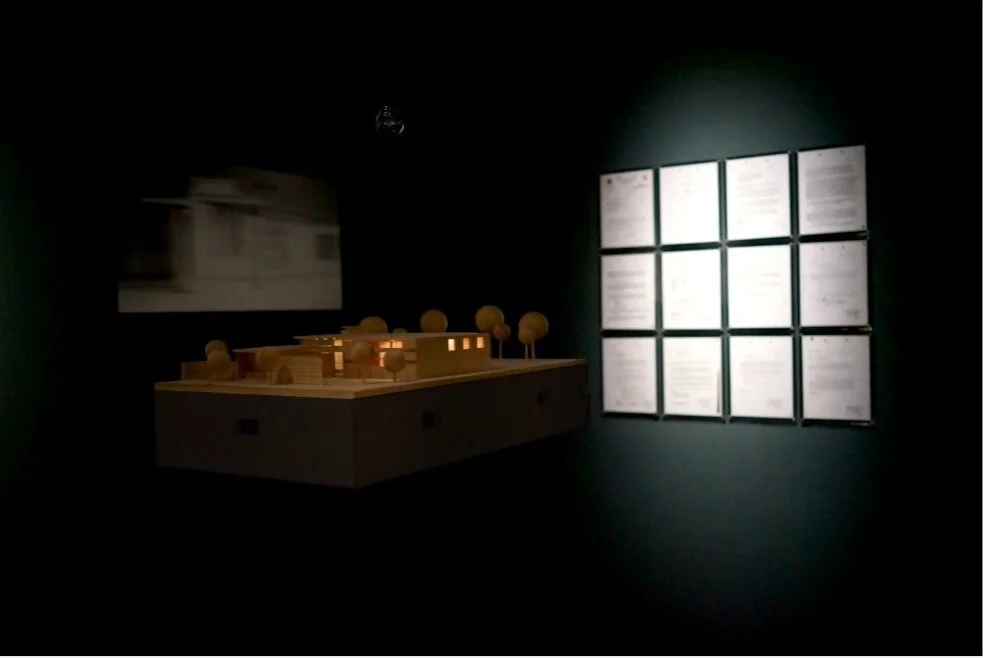
This Future has a Past was selected by Curator Cynthia Davidson as the inaugural exhibition for Anyspace, hosted by New York’s Center for Architecture. It is presented as a seminal epistemic investigation into Ain, FBI surveillance, and the “mysterious fate” of his 1950 Exhibition House, Our View of the Future. MoMA re-discovered the original model of the Exhibition House (1950) which was then included in This Future has a Past exhibition at the Center for Architecture.
Press on the exhibition included Metropolis magazine’s A Model Life: New Exhibition Highlights Forgotten Midcentury Architect Gregory Ain, The Architect’s Newspaper’s This Future Has a Past: FBI files, a Missing MoMA House, and the lLfe of Modernist Architect Gregory Ain, Archinect’s Gregory Ain, once “the most dangerous architect in America”, and the Mysterious fFte of his MoMA Exhibition House, Architect Magazine’s The Enigma of the Lost Gregory Ain’s Exhibition House, and World Architecture’s Gregory Ain’s Exhibition House Designed for MoMA’s Garden Still Keeps Its Mystery.
Several media features, including The New York Times article Gregory Ain: The Architect, the Red Scare, and the House That Disappeared and Artsy’s The “Most Dangerous Architect in America” Built a House—Then It Vanished brought international attention to the project and the question raised by its research.
2018
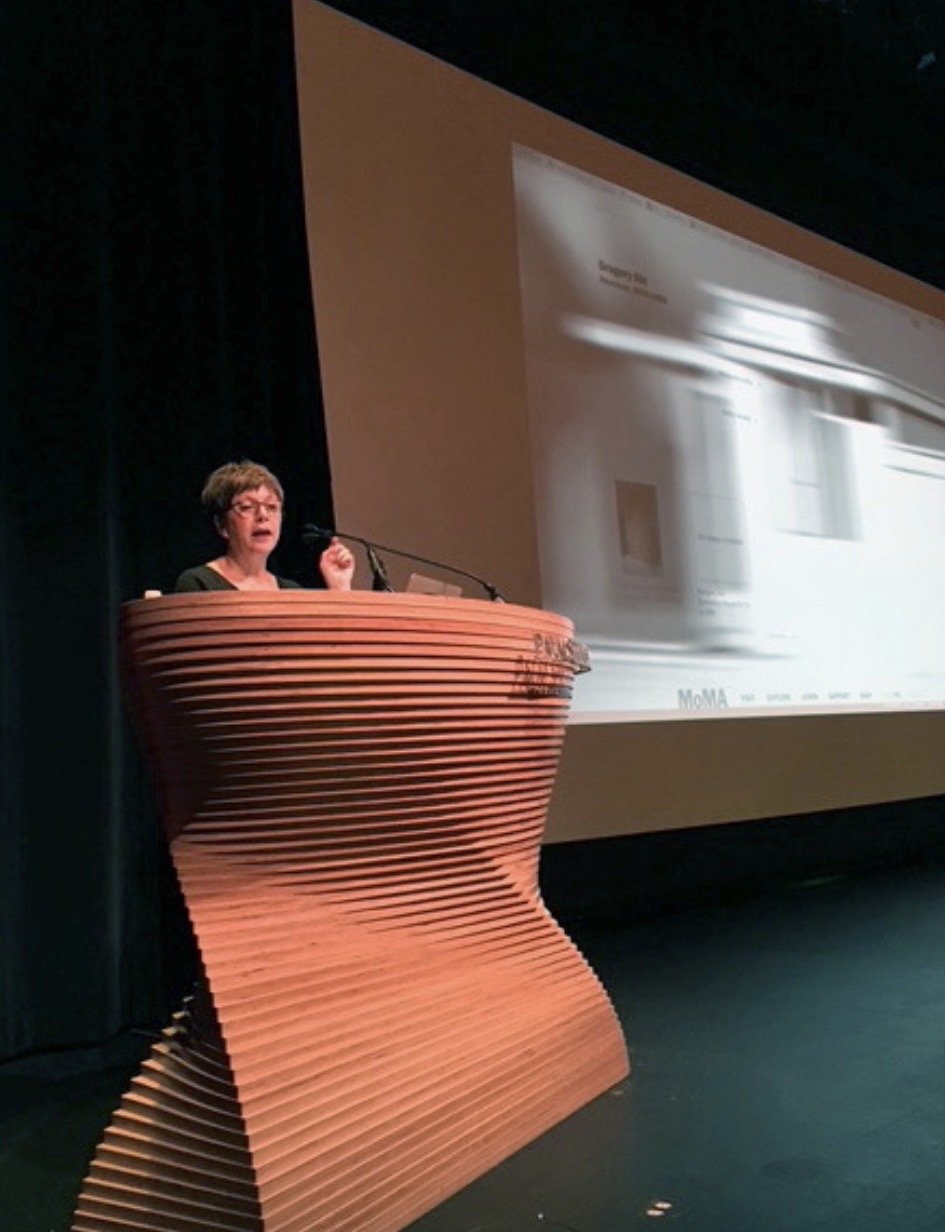
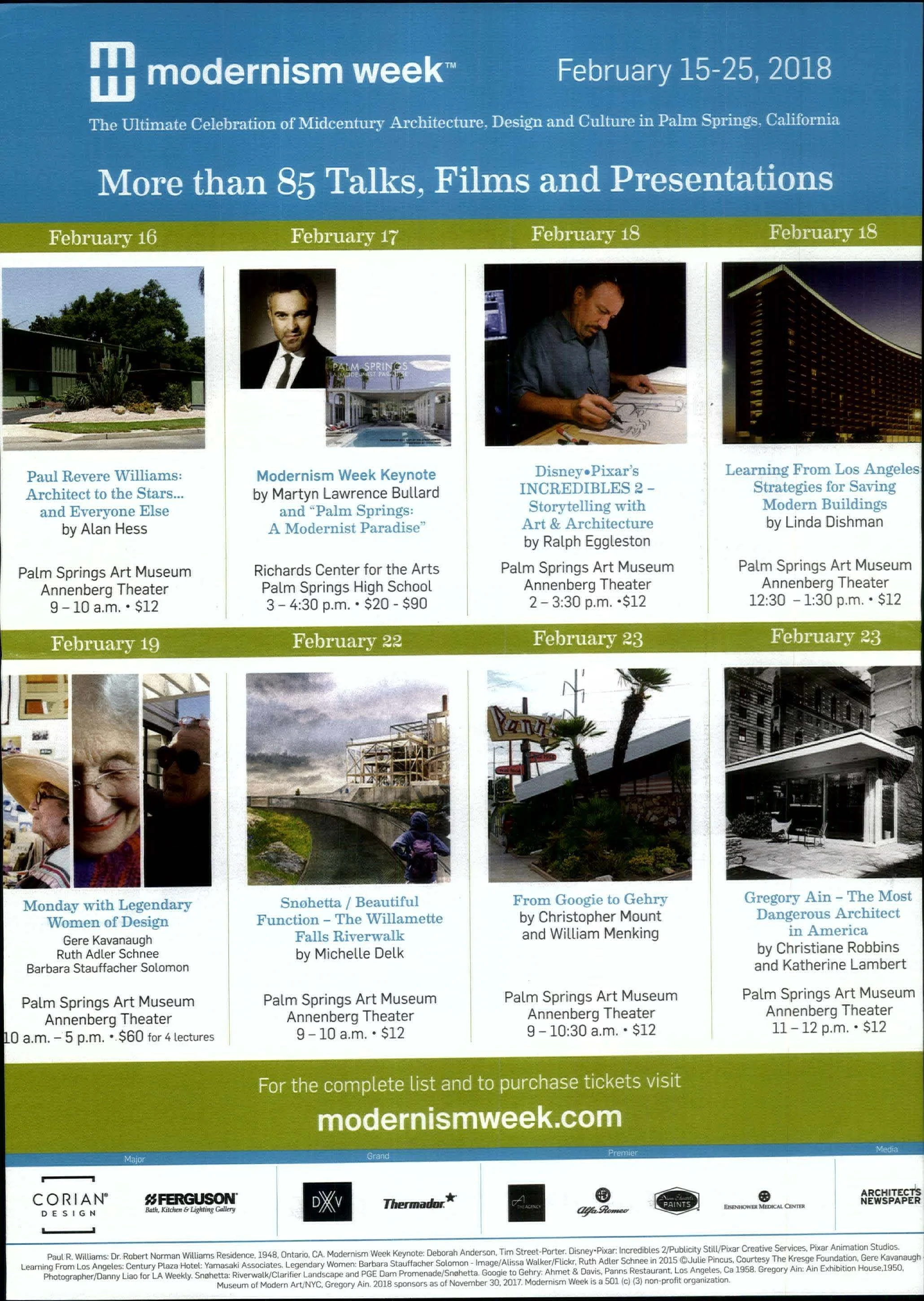
At the Palm Springs Museum during Modernism Week, Katherine Lambert and Christiane Robbins lectured and presented a panel discussion, The Most Dangerous Architect in America, on Gregory Ain and his “mysterious” MoMA Exhibition House. Panelists included Antonio Pacheco.
2021
The New York Times published an article documenting the public “rediscovery” of Gregory Ain’s exhibition house in Croton-on-Hudson. Scholars—including Anthony Denzer—have since corroborated Lambert and Robbins’ long-standing investigation as the earliest sustained critical inquiries into Ain’s practice. Their research challenged a half-century of accepted assertions by demonstrating that the MOMA exhibition house had not, in fact, been destroyed.
Instead, as their findings established, Ain’s Our View to the Future had been relocated to the Hudson Valley—situated in proximity to the 1949 Museum of Modern Art exhibition house by Marcel Breuer, itself later moved to the Rockefeller estate.
Through its sustained program of original, archival, and documentary research—augmented by testimony from firsthand witnesses—No Place Like Utopia has effectively reversed the historical erasure of Gregory Ain. In doing so, it has reinserted his work into 21st-century public discourse, curatorial frameworks, and scholarly consideration.
———REFERENCES———
Katherine Lambert
Christiane Robbins
Metropolitan Architectural Practice (MAP) and MAP Studio
Our View of the Future, MoMA Exhibition House, Gregory Ain
Gregory Ain: The Modern Home as Social Commentary, Anthony Denzer
Avenel Cooperative Housing Archival collection at LA Conservancy
The Architecture of Gregory Ain, The Play between the Rational and the High Art, David Gebhart, Harriett Von Bretton, and Lauren Weiss
———EXHIBITIONS———
No Place Like Utopia video short, 1000 sq. ft. at the American Association of Architects’ Architecture and the City Festival, San Francisco, CA and tcreened via a National circuit.
No Place Like Utopia video short, 1000 sq. ft. at the Gwangju Biennale exhibition design is design is not design
Gregory Ain: Low-Cost Modern Housing and the Construction of a Social Landscape, Julius Shulman Institute, Woodbury University, Los Angeles, CA
This Future Has a Past installation at Venice Architecture Biennale Time, Space, Existence exhibition
This Future Has a Past solo exhibition, Center for Architecture, New York, NY
Who Was Gregory Ain? Conversation with Barry Bergdoll, Philip K. Johnson Curator of Architecture, MOMA, Cynthia Davidson, Director/Curator, Anyspace, LOG, Katherine Lambert, AIA and Christiane Robbins.
———PRESS———
How Midcentury Architect Gregory Ain Mixed Social Responsibility With Great Design, Architectural Digest
A Model Life: New Exhibition Highlights Forgotten Midcentury Architect Gregory Ain, Metropolis
This Future Has a Past: FBI files, a Missing MoMA House, and the Life of Modernist Architect Gregory Ain, The Architect’s Newspaper
Gregory Ain, once “the most dangerous architect in America”, and the Mysterious fate of his MoMA Exhibition House, Archinect
The Enigma of the Lost Gregory Ain’s Exhibition House, Architect
Gregory Ain’s Exhibition House Designed for MoMA’s Garden Still Keeps Its Mystery, World Architecture
Gregory Ain: The Architect, the Red Scare, and the House That Disappeared, The New York Times
The “Most Dangerous Architect in America” Built a House—Then It Vanished, Artsy
MoMA Built a House. Then It Disappeared. Now It’s Found, New York Times